Physical retail is not standing still. It is being reshaped.
It is impossible to talk about Australian retail without acknowledging the pressure consumers and retailers are under.
The cash rate has reached 4.85%, its highest level in 18 years, while annual inflation was 4.3% in September. Higher borrowing costs and persistent cost-of-living pressure are making households more selective about where and how they spend.
That pressure is also reshaping the retail sector. David Jones entering receivership and voluntary administration is a stark reminder that longevity and brand recognition alone do not guarantee continued relevance. Its stores and online business continue to trade while receivers review the operation and administrators pursue a recapitalisation or sale.
At the same time, significant capital continues to flow into Australia’s strongest shopping centres. CBRE reports that retail property investment reached $12.7 billion in 2025, with regional shopping centres attracting $6.9 billion. Nearly 60% of centres have vacancy rates below 5%, reflecting continued confidence in high-quality retail destinations.
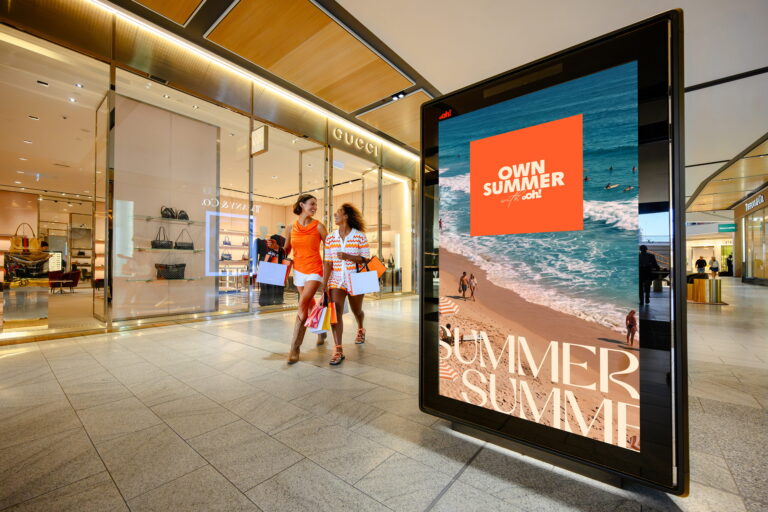
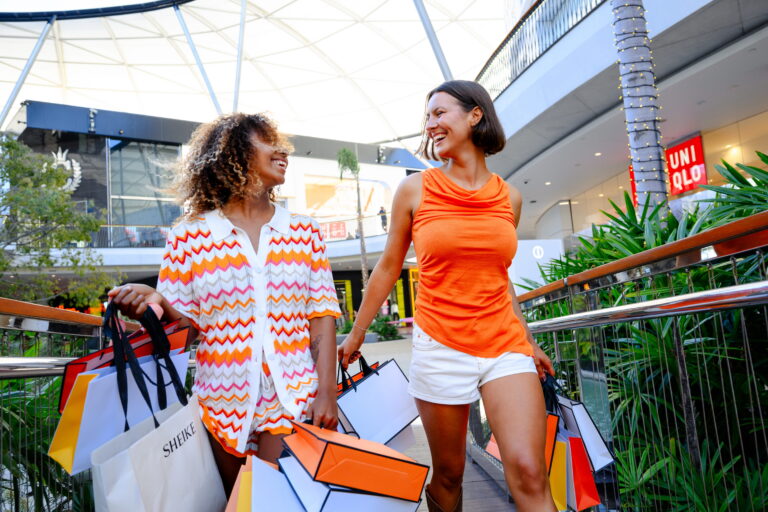
These realities are not contradictory. They point to a retail market being reshaped. Individual retailers and traditional formats are under pressure, while the strongest shopping centres are becoming broader destinations for dining, entertainment, services and social connection.
As consumers become more selective about where they spend their time and money, the destinations that continue to attract them become more valuable, not less.
For advertisers, the implication is simple. Retail centres are not only places to buy. They are places to influence consumers who are ready to stop, relax, shop and socialise.
Retail media’s next chapter is influence
For years, retail media, including retail Out of Home, has been defined by its ability to get closer to the transaction.
Success has been measured through clicks, visits, transactions, basket uplift, attribution and return on advertising spend. These measures have helped establish retail media as one of advertising’s fastest-growing channels. But they may also have narrowed our field of vision.
Every marketer wants to measure the sale, but the influences that shape it begin well before purchase. Before there is a transaction, there is influence. Before consideration, there is memory. And memory starts with being seen.
Retail media should not only be about getting closer to the basket. Brands need to influence people before the transaction, building the familiarity and memory that ultimately shape what ends up in it.
Why broad reach matters even more when consumers are cautious
Somewhere along the journey towards targeted marketing, “broadcast” became a dirty word. The industry became captivated by precise segmentation and the promise of minimising wastage.
But consumers do not announce when they are six months, six weeks or six minutes away from entering a category. Brands need to build memory before that moment exists.
When budgets tighten, there is a natural temptation to focus almost exclusively on the people closest to purchase: find the known shopper, optimise the conversion and concentrate investment at the bottom of the funnel.
But treating proximity to the storefront as the whole opportunity is like saying only performance media matters. Marketers know it is one part of the equation. Broad reach still matters because brands need to capture the attention of existing and potential customers before they are ready to buy.
Australia’s biggest shopping destinations bring together large and diverse audiences across retail, dining, entertainment, leisure and services. A major shopping centre is not simply a collection of retailers. It is a mass-audience environment.
In an increasingly fragmented media landscape, the ability to aggregate large audiences has real value. The objective is not to be beside the greatest number of stores or across the greatest number of locations. It is to reach enough people, often enough, to build familiarity, memory and consideration.
The media opportunity is not defined by the shopping mission. It is defined by the audience.
People in shopping centres are not only valuable to the retailers around them at that specific moment. They are also choosing cars, banks, insurers, airlines, streaming services, technology and holidays. The influence opportunity extends well beyond the immediate basket.
Beyond the basket
Retail Out of Home has spent much of the past decade proving it can measure a sale. The next decade will be defined by its ability to influence one.
That matters now more than ever. Australian households are under pressure, consumers are becoming more selective, retailers are adapting and marketers are managing tighter budgets while being asked to prove that every investment works.
In this environment, the battle for attention, memory and consideration becomes more important, not less.
The opportunity is not about being everywhere. It is about being present in the environments that continue to bring large audiences together and using that scale to influence what people remember when they are ready to spend.
Because the brands that win will not simply be the cheapest or easiest to buy. They will be the ones that invested in being easiest to remember.