
As originally published in AdNews.
When my daughter, Maisie, was four, she once asked me to turn on “the app that chooses for you.” She was referring to free-to-air television – and it remains one of the smartest observations I’ve ever heard from a four-year-old.
She loved the removal of decision paralysis. What she loved less were the ads that interrupted her chosen content. Unlike the other “apps that didn’t choose for you,” this experience was punctuated by bursts of promotional activity that felt, to her, intrusive and unnecessary.
“Why do they do this, Daddy?” she asked.
I scrambled to synthesise commerce and consumerism for a preschooler. “Because somebody needs to pay for the app,” I replied, hoping that would suffice.
For too long, children and adults alike have felt that advertising detracts from their viewing experience. But it doesn’t have to. Advertising shouldn’t interrupt; it should enhance. It should reward attention with utility, entertainment and meaning.
Nowhere is that more true than in Out of Home (OOH).
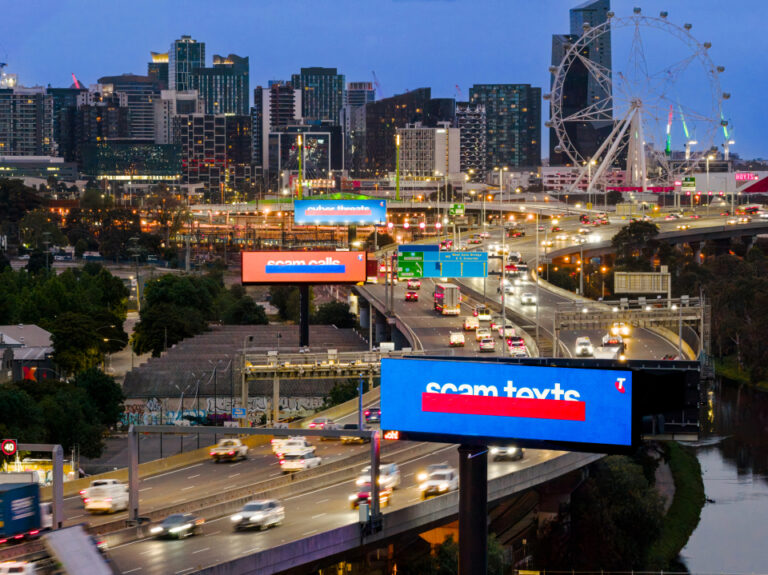
Unlike most channels, OOH doesn’t interrupt content – it is the content. It’s public space storytelling, sponsored by brands. And because it’s consumed passively and non-intrusively, the onus on creative is enormous. If it doesn’t engage, it simply fades into the background.
Analytic Partners’ research shows that creative execution accounts for 41% of ROI in OOH. That means that nearly half the effectiveness of the channel sits in the hands of those crafting the work.
To earn attention in public space, OOH must do three things well. It must be:
- Distinctive
- Salient
- Consistent
Driving Distinctiveness
We often describe OOH as “unmissable” – unskippable and unblockable. But without strong creative, brands risk becoming unmissable wallpaper.
The first job is simple: be noticed.
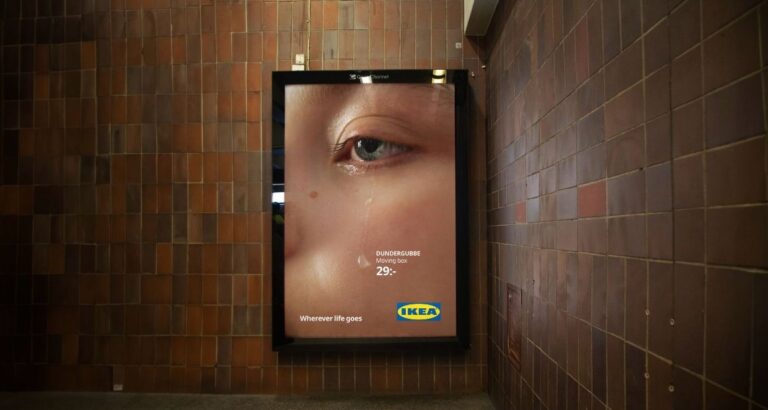
Every brand has distinctive brand codes – colours, typefaces, logos, slogans, shapes, talent, packaging. The question isn’t whether you have them; it’s how you use them. Distinctiveness doesn’t require scale or spectacle. It might be a bold colour contrast, a stripped-back layout, a witty line, or a product-led execution so recognisable the logo becomes optional.
In public space, simplicity is a superpower. You have seconds – often less than three – to leave an imprint. Remove the unnecessary. Amplify what’s ownable. Consider how humour, surprise or visual tension can stop someone in their tracks.
And importantly, think about how OOH builds on memory structures created in other channels. The best executions don’t work in isolation; they reinforce what audiences already know. Once you’ve secured attention, the next job is to make it stick.
Securing Salience
Distinctiveness gets you noticed. Salience ensures you’re remembered.
There’s little value in being highly visible if the message isn’t meaningful. Salience is about embedding your brand into memory, so it’s easily recalled in moments of need.
In OOH, this often comes down to tailoring creative to the environment. Is the message format-fit? Can motion add vitality, as we say, “if it’s got a roof, it can move”? Can context make the execution feel local, timely or culturally relevant? Can interactivity invite participation rather than passive viewing?
As Sasha Mackie, Chief Marketing Officer of HBO Max, has said of OOH: “Impact and creativity often drives more than reach does. You’re starting with a blank canvas and then you’ve got to build on top of it based on context and location.” That blank canvas is a powerful thing. When creative aligns with real-world context, the street, the commute, the venue, the moment, it becomes part of lived experience rather than a layer on top of it. And that’s when memory forms.
Cultivating Consistency
OOH has another superpower: the ‘F-word’. Frequency.
Analytic Partners’ ROI research shows that brands using multiple OOH formats in a single campaign saw up to a 30% uplift in ROI. Those maintaining a presence for more than eight weeks saw up to a 79% increase.
Why? Because repeated, real-world exposure reinforces mental availability over time. OOH exists across journeys and environments, allowing brands to reintroduce themselves again and again, naturally.
Creative plays a critical role here. The oOh! Outcomes Study (2024) found that campaigns using three or more creative variations within a consistent territory saw up to a 20% uplift in brand sales. Variation doesn’t dilute consistency; it strengthens it. A clear creative platform expressed in multiple ways keeps work fresh while reinforcing core brand cues. It rewards attention and aligns with OOH’s fundamental value exchange: If you want eyeballs, you must give people a reason to care.
As Mark Ritson famously said, “There is no such thing as creative wear out.” Bold, distinctive, on-brand creative doesn’t diminish with exposure, it amplifies.
In a channel composed entirely of advertising, that principle matters. OOH has the unique ability to turn ads into public storytelling at scale. When done well, it doesn’t interrupt life; it enhances it.
Even for four-year-olds.