
As originally published in AdNews.
In the battle for attention, Bel Harper, chief product and marketing officer at oOh!media unpacks why attention is marketing’s most contested currency and why Out of Home helps brands stop competing in the scroll and start owning attention, building memorability and showing up in ways audiences can’t ignore.
The more I speak to CMOs, the clearer the picture becomes. No matter which words they use, whether it’s fragmentation, noise, clutter, competition, they’re all describing the same escalating challenge: earning attention. In a world of endless scrolling, skipping and distraction, attention has become the most valuable and most threatened resource in marketing. And the pressure to secure it is only intensifying.
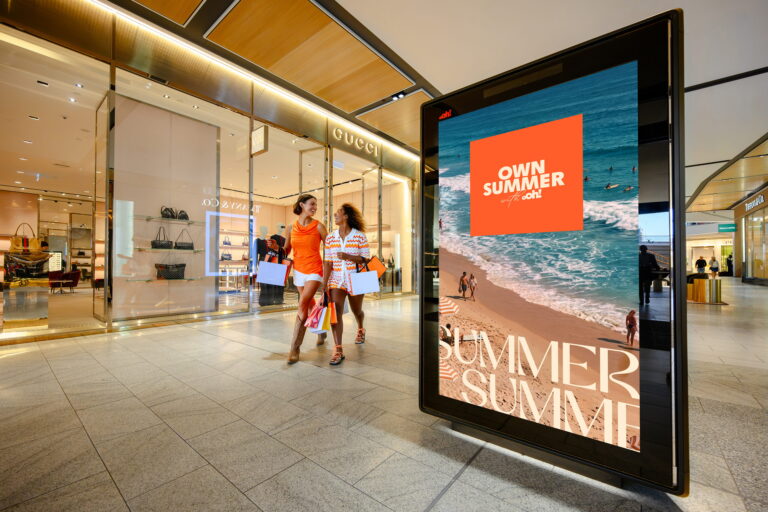
But while attention is the crisis, the solution isn’t simply to be seen. It’s to create moments that command attention, moments that stand out so clearly in the real world that audiences can’t help but notice. This is where Out of Home is stepping into its own. Not as a background channel, but as the place where brands create the distinctive, high impact experiences that cut through the noise.
Digital dominates, but classic is reclaiming its power
For modern CMOs, creativity is no longer just about the message on a billboard. It’s about where the brand appears, how it leverages the environment and how it maximises every dollar of its marketing budget. Attention isn’t won through frequency alone; it’s won through presence, scale and context.
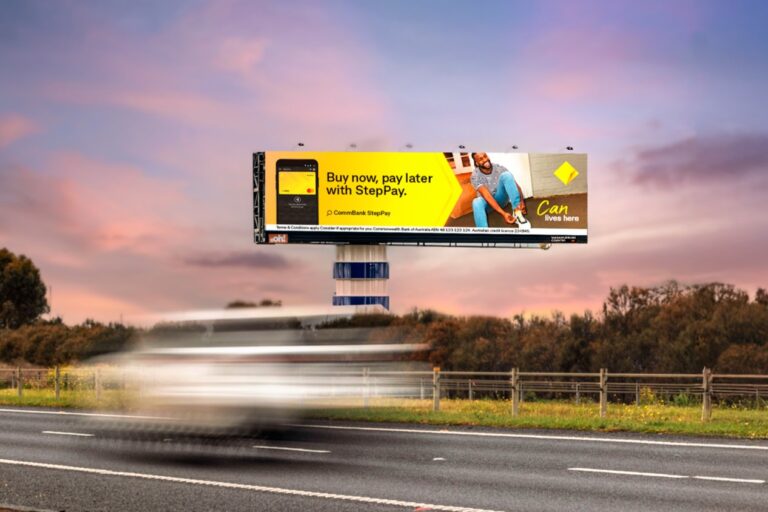
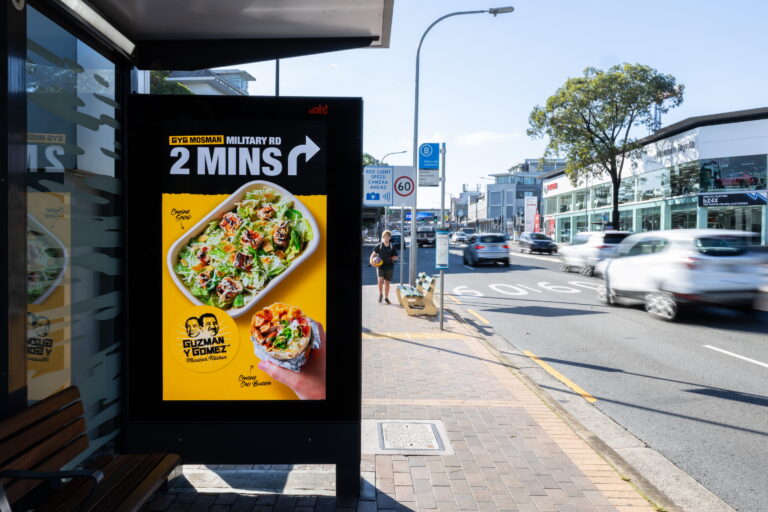
Digital OOH has become a powerhouse. It’s flexible, dynamic, data driven and capable of delivering contextually relevant creative at speed. It has transformed the medium and opened up new creative possibilities. But in digital’s rise, classic OOH was often treated as the poor cousin: static, traditional, overshadowed.
That perception is shifting fast.
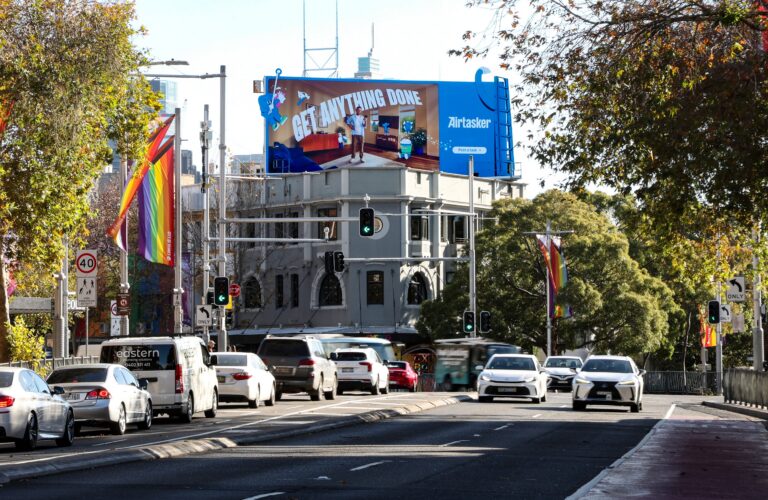
Classic OOH is experiencing a resurgence because it offers something digital cannot replicate: a sense of physicality and longevity that anchors brands in the real world. These sites don’t compete for attention, in a crowded scroll they rise above it. And when used strategically, they create the kind of unmissable moments audiences remember long after they’ve passed by.
Specsavers has mastered this better than almost any other brand. Their work on the Glebe Island Silos shows how classic OOH can create a moment of discovery that stops people in their tracks. As Shaun Briggs, Specsavers director of marketing planning Australia & New Zealand puts it: “With something like the Glebe silos, what makes it work is the grand scale of it. You’re getting people to fill in the gaps, it’s that awesome moment where people go, ‘Oh, I get it’.”
“OOH is brilliant for this, you cannot miss it, you cannot skip it. It’s the permanence, the prominence, the physical dominance that makes it work.”
Classic isn’t just back, it’s becoming one of the most powerful tools for earning attention and building distinctiveness in a fragmented media world.
Attention comes from the moments people can’t ignore
We see this every time we release a media first opportunity to market. Brands move quickly because they understand the value of owning a moment that cannot be ignored. Telstra and Coopers Brewery were among the first to take over Melbourne’s entire Bolte Bridge, a placement impossible to miss and impossible to forget.
For Kate Dowd the national marketing manager at Coopers Brewery it was the exact attention earning moment they needed in the Melbourne market at the start of the events season and right as Spring Racing kicked off.
“We had been looking for that one opportunity to change the trajectory in Victoria and this was our big statement,” she says. “It was the most impactful media buy we have ever done. We were able to own a very distinctive moment in the marketplace. Being the first to take over the Bolte Bridge with oOh! was truly a distinctive moment for the brand, and a pretty good life moment for me.”
These aren’t just placements. They’re attention engines, cultural punctuation marks that shift perception, spark conversation and deliver impact far beyond paid media.
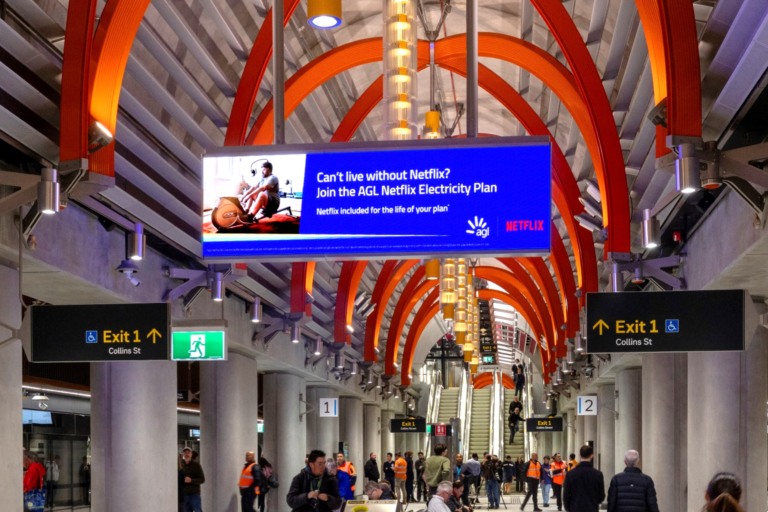
Julie Hutchinson, marketing director at Volvo Cars is feeling the same pressure as every CMO: cut through the noise, stay distinctive and show up in the right places. For her, oOh!’s new Metro network represents the next evolution of attention earning OOH. “It’s premium placements, large placements, totally unmissable by the thousands of people who travel through the Metro every day,” she says. “The scale of the screens and the impact you can deliver is truly innovative and exciting. As a luxury automotive brand, it’s really important that we have the right placements, and OOH allows us be selective about where we show up.”
Out of Home’s strength lies not just in reach, but in the quality of the environments where brands can dominate attention. When the placement is right and the creative is built for the space, OOH becomes more than a channel. It becomes a stage.
OOH is becoming a platform for live attention
The evolution of OOH isn’t just about bigger screens or clever placements. It’s about transforming the medium into a platform for cultural participation. Cricket Australia’s media first initiative, streaming the first over of every Test match across oOh!’s national network, turned OOH into a live, shared moment – publicly. Fans could watch wherever they were and feel part of the summer conversation. It wasn’t a billboard, it was a broadcast moment designed to capture attention in real time.
This is where OOH is heading: from classic placements to dynamic cultural touchpoints. From visibility to memorability. From being seen to being unmissable.
Attention may be harder to earn than ever, but distinctiveness is entirely within a marketer’s control. And OOH, in all its classic, digital and immersive forms, is becoming the channel where attention is captured, distinctiveness is built and brands create the moments that truly matter.